You Don't Have a Disease. You Have Noise: The Anatomy of Ama and the Terrain in Decay
The smoke alarm is not the fire. A symptom is not the disease. Modern medicine has spent 150 years treating the alarm — suppressing, numbing, excising. Two ancient traditions, separated by 5,000 kilometres and 2,500 years, independently arrived at the same diagnosis: the body is not under attack from outside. It is choking on its own unfinished business.
The Oldest Diagnostic Framework in Medicine
Around 700 BCE, Indian physicians began codifying a medical system of extraordinary precision. The Charaka Samhita — the foundational text of Ayurvedic internal medicine — described a process called Samprapti: the complete pathogenesis of disease, from first imbalance to final expression. Not in vague spiritual terms, but in stages, each with specific signs, tissues, and intervention windows.
At the centre of this framework stood two opposing forces: Agni and Ama.
These are not metaphors. They are descriptions of the same metabolic reality that Dr. Jerry Tennant would rediscover in the 21st century — the hard distinction between a cell that generates sufficient voltage to perform its function, and one that cannot.
Agni is the body's transformative fire — the capacity to convert, extract, and eliminate. It operates at every level: the digestion of food, the metabolism of emotions, the processing of environmental signals. Ama is what forms when Agni fails: the undigested, unprocessed, toxic residue that accumulates in the tissues and channels of the body.
Ama is heavy, sticky, cold, and obstructing. It does not announce itself with a fever. It settles quietly, blocks quietly, and corrupts the terrain quietly — until the terrain can no longer sustain normal function.
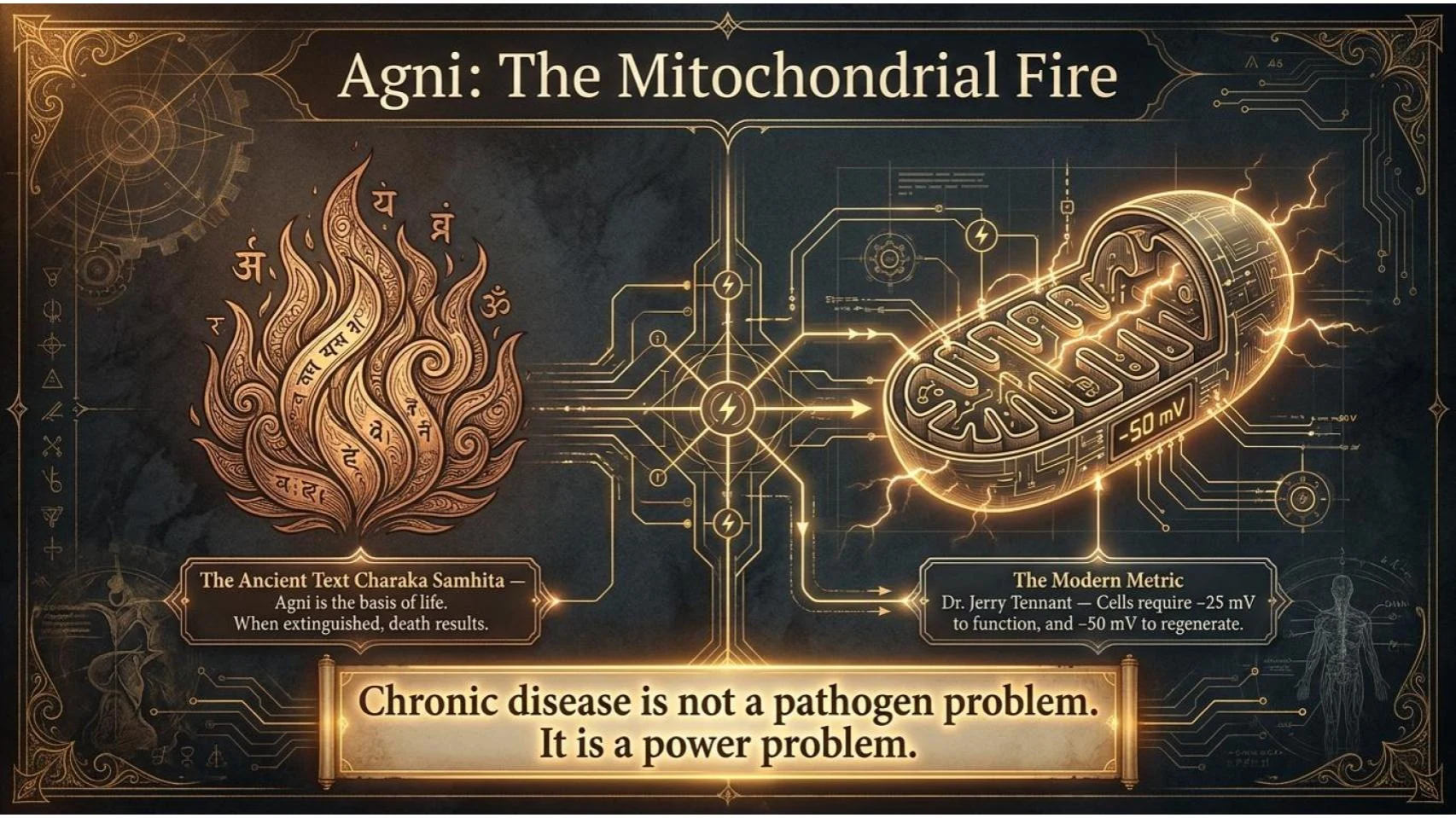
Agni: The Mitochondrial Fire
The Charaka Samhita (Sutrasthana 27.349) states: "Agni is the basis of life itself. When Agni functions properly, a person lives long in health; when it is disturbed, disease follows; when it is extinguished, death results."
In 2010, Dr. Jerry Tennant published Healing Is Voltage. His conclusion: the mitochondria are the cell's battery chargers. Each cell must maintain a voltage of approximately −20 to −25 mV to function; −50 mV is required for cell division and repair. When mitochondrial output drops below threshold, the cell cannot execute its programmed function. Chronic disease, in Tennant's model, is not a pathogen problem. It is a power problem.
The Charaka Samhita describes four states of Agni:
- Sama Agni — balanced, regular, efficient transformation. The cell at full voltage.
- Vishama Agni — irregular, variable, producing inconsistent digestion. Voltage fluctuation, autonomic dysregulation.
- Tikshna Agni — too sharp, too fast, burning through reserves. Oxidative overload, inflammatory phenotype.
- Manda Agni — slow, sluggish, cold. Mitochondrial depression, the classical hypothyroid, chronic fatigue pattern.
Every one of these maps to a measurable clinical state. The ancient physicians did not have voltmeters. They had something equally precise: 3,000 years of systematic clinical observation.
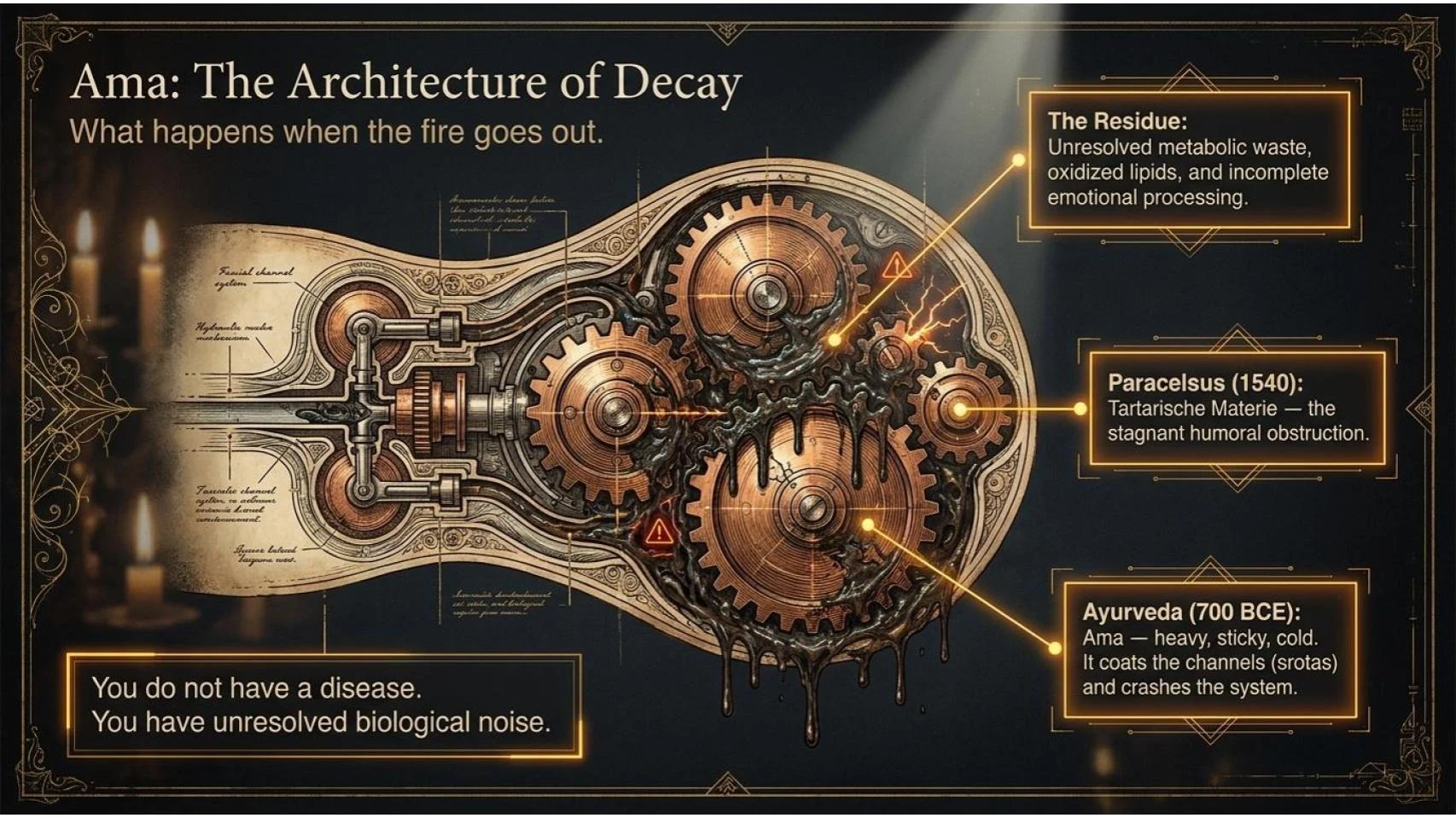
Ama: What Accumulates When the Fire Goes Out
When Agni weakens, the body fails to complete its metabolic transactions. Food is partially digested; emotional stress leaves unresolved biochemical residue; environmental toxins are incompletely cleared. This residue — Ama — is not a single molecule. It is the aggregate of unfinished processing: oxidised lipids, unbound metabolic intermediates, incompletely processed proteins, inflammatory cytokines without resolution.
The Charaka Samhita describes Ama's characteristics with clinical precision: sama-gandhi (foul-smelling, like fermentation), picchila (sticky, coating the mucous membranes), guru (heavy, producing fatigue), sthira (stable, resistant to elimination). It coats the srotas — the body's channel network — and progressively impairs their function.
In 1540, Paracelsus arrived at the same conclusion from a different direction. His term: tartarische materie — tartaric matter. The body's internal alchemist, which he called the archaeus, is responsible for the continuous transformation and elimination of metabolic residue. When the archaeus fails, tartaric matter accumulates in the joints, vessels, and organs — calcifying, obstructing, corrupting the architecture. His treatment logic was identical to Ayurveda's: stoke the internal fire, clear the channels, eliminate the residue.
Two systems. One observation. Four thousand years of independent confirmation.
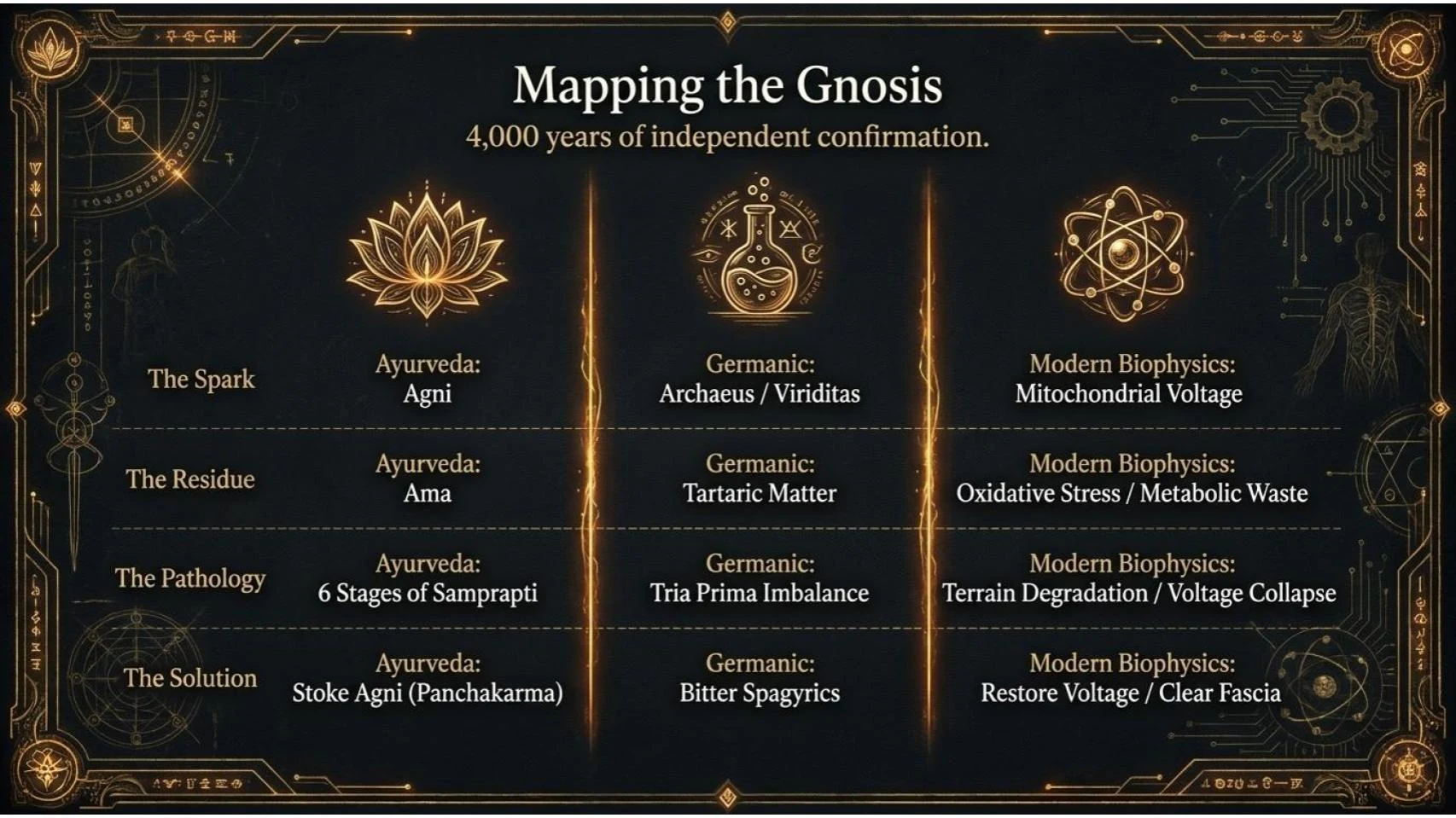
| Concept | Ayurveda (700 BCE+) | Germanic / Paracelsus (1540) | Modern Biophysics |
|---|---|---|---|
| Vital transformative force | Agni | Archaeus / Viriditas (Hildegard) | Mitochondrial voltage — Tennant (2010) |
| Toxic residue from failed transformation | Ama | Tartarische materie | Oxidative stress, metabolic waste, unresolved inflammation |
| Disease causation | Samprapti — 6 stages of Ama accumulation | Tria Prima imbalance, archaeus failure | Terrain degradation — Béchamp; cellular voltage collapse |
| Channel obstruction | Srotas blocked by Ama | Fascial stagnation, humoral obstruction | EZ-water disruption — Pollack (2013) |
| Primary intervention | Stoke Agni, eliminate Ama (Panchakarma) | Spagyrische extractie, kruidenwijn, bitters | Restore voltage, reduce oxidative load, clear fascial channels |
Béchamp Was Right: The Terrain Decides the Residents
Antoine Béchamp (1816–1908) proposed what Pasteur's germ theory made professionally dangerous to acknowledge: microorganisms do not cause disease in a healthy terrain. They respond to it. His experiments with microzymas — the foundational biological particles that he isolated from living and dead tissue — showed that when the internal environment degrades, the microbial community transforms. The benign becomes pathogenic. Not because a new pathogen invaded, but because the terrain invited the transformation.
Pasteur, on his deathbed, is reported to have acknowledged: "Bernard was right. The microbe is nothing. The terrain is everything." Whether apocryphal or not, the clinical evidence has confirmed it consistently for over a century: you cannot maintain a pathogenic environment in a high-voltage, Ama-free terrain.
As Ama accumulates in the srotas, the local terrain degrades. pH shifts. Voltage drops. Oxygen tension falls. The microbial ecosystem that thrives in this degraded environment is not the same one that occupies a clean, high-voltage matrix. The smoke detector is not broken. The house is slowly filling with smoke.
Stop treating the smoke detector. The alarm — the symptom — is not the problem. It is the signal that Agni has weakened and Ama has found a place to settle. The correct clinical question is not "which drug suppresses this alarm?" It is: "where in the six stages of Samprapti is this body, and what is still reversible?"
The Six Stages of Samprapti: A Disease Staging System 2,700 Years Ahead of Its Time
The Charaka Samhita describes Samprapti — the complete pathogenesis — as a six-stage progression. This is not metaphysics. It is a clinical staging system of extraordinary utility, because it identifies the point at which intervention is still easy, and the point at which it becomes structural.
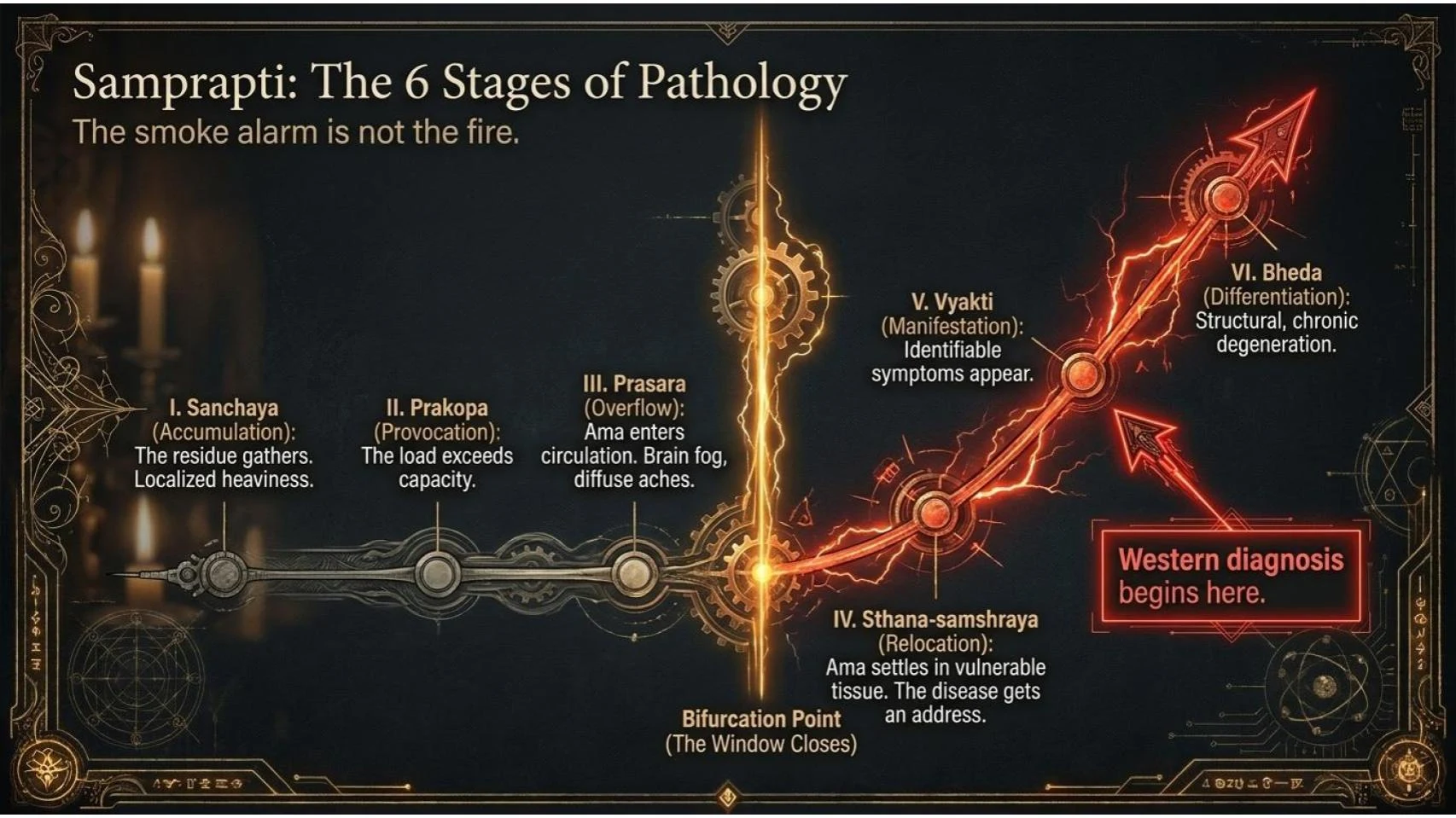
Accumulation — Ama begins to collect
A specific dosha (Vata, Pitta, or Kapha) begins to accumulate beyond its normal site. Signs are subtle: mild digestive discomfort, vague fatigue, unusual food cravings, slight coating on the tongue. The body is signalling — quietly. Intervention here is trivial: dietary correction, bitter digestives, rest. The fire just needs kindling.
Aggravation — the accumulation intensifies
Ama builds further. The imbalanced dosha becomes agitated. Symptoms are now noticeable but still localised: acid reflux, joint stiffness in the morning, mood instability, skin flares. The body is escalating its signal. Still straightforward to address — targeted herbs, Agni restoration protocols, elimination of the driving cause.
Overflow — Ama enters the circulation
The accumulation exceeds the capacity of its primary site and begins to spread through the srotas into the general circulation. Symptoms become systemic: diffuse aching, brain fog, intermittent fatigue without identifiable cause. On standard bloodwork: nothing significant. The fire is inadequate, the residue is moving, and the clinical window is narrowing.
Relocation — Ama settles in a vulnerable tissue
Circulating Ama finds a tissue whose local Agni is weakest — a genetically predisposed organ, a previously injured site, a chronically inflamed system — and lodges there. This is the critical bifurcation point. Before stage IV: the disease has no fixed address. After stage IV: it does. Intervention is now significantly more complex, requiring sustained botanical and lifestyle protocol.
Manifestation — the recognisable disease appears
The disease now has a name. The symptoms are clear, consistent, and diagnosable within the Western framework. This is where modern medicine typically begins its involvement — at stage V of a six-stage process. The system has been signalling for months or years. The intervention required now is substantial, sustained, and requires addressing all upstream stages simultaneously.
Differentiation — structural and chronic
The disease differentiates into its final, tissue-specific form: rheumatoid arthritis, type 2 diabetes, atherosclerosis, autoimmune pathology. Structural changes are now present. Reversal is the hardest work the body can do. This is not the beginning of the problem. It is the end of a very long story that started with a weakened fire and an unaddressed residue.
Modern oncology has its own staging systems. Modern cardiology has risk stratification frameworks. But none of them begin at stage I or II — because Western medicine has no diagnostic tool for "accumulation of metabolic residue in the absence of frank pathology." The annual check-up finds nothing, and the patient is told they are fine, while the Ama quietly moves from stage II to III to IV.
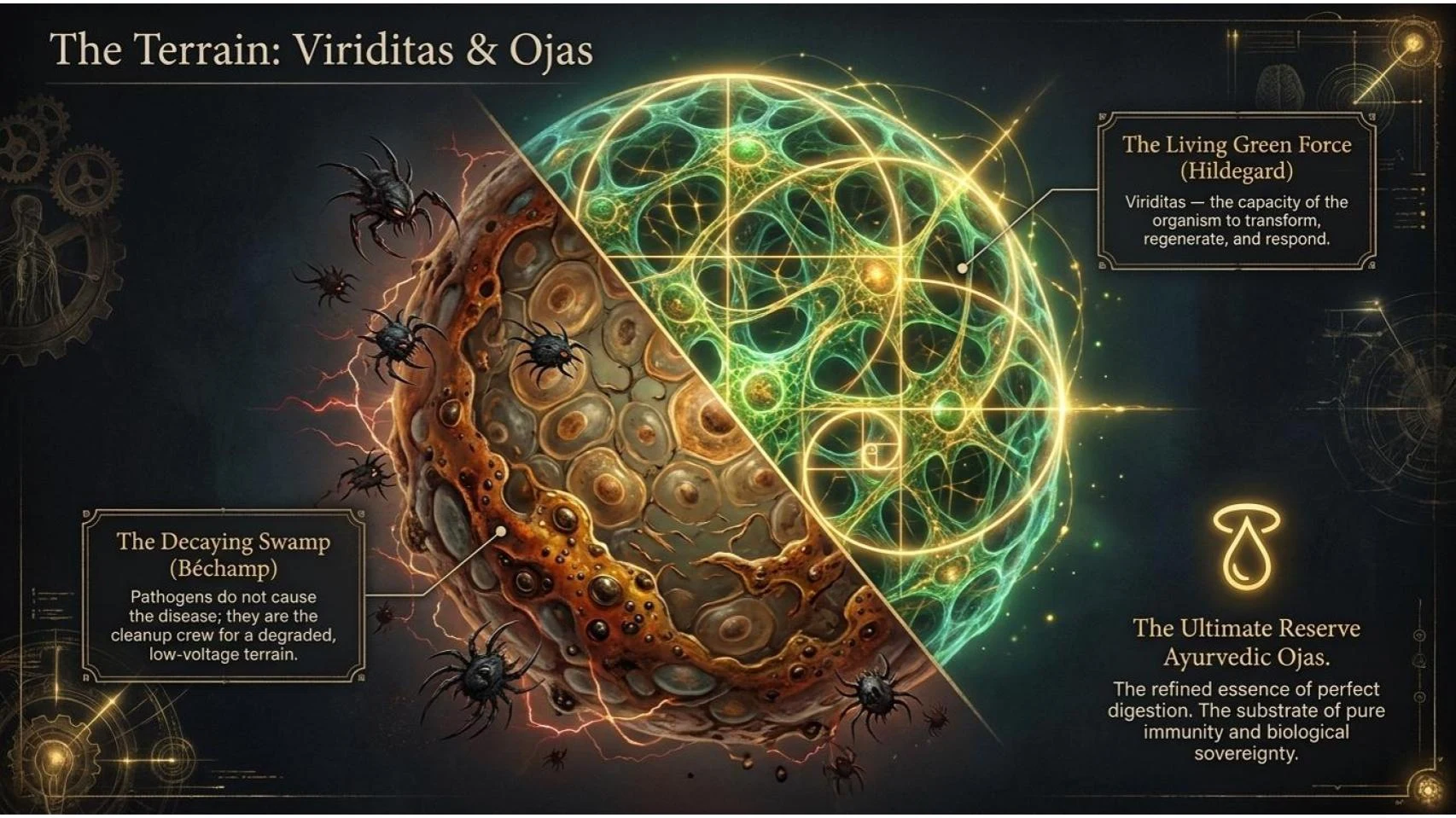
Hildegard and Ayurveda: Two Systems, One Diagnosis
Hildegard von Bingen, writing in the Rhineland in the 12th century, described her central concept as Viriditas — the living green force that flows through creation and through the body. Viriditas is not poetic license. It is a clinical descriptor: the quality of the living organism that can still transform, regenerate, and respond. When Viriditas weakens, the body loses its capacity for self-repair. The channels stagnate. The humours thicken.
The Ayurvedic equivalent is Ojas — the refined essence of all seven tissues, the ultimate product of complete and successful digestion and transformation. Ojas is what remains when Agni has done its work perfectly: the substrate of immunity, clarity, vitality, and resilience. When Ama accumulates, Ojas is consumed in the attempt to neutralise it. The body spends its reserves fighting its own residue.
Viriditas and Ojas are the same phenomenon described in different languages. Both traditions agree on the mechanism of loss: insufficient transformative fire, accumulating residue, progressive depletion of the organism's deepest reserves. And both traditions agree on the restoration pathway: botanical bitter compounds, specific roots and resins, complex plant preparations — not isolated molecules, but the full chemical intelligence of the plant.
The Botanical Response: What Burns Ama
Both traditions developed extensive botanical pharmacopoeias targeting the same mechanism: restore Agni, mobilise Ama, clear the channels, rebuild Ojas. The overlap between Ayurvedic and Germanic materia medica is not coincidental. It is convergent clinical evidence — two independent research programmes arriving at the same molecular targets.
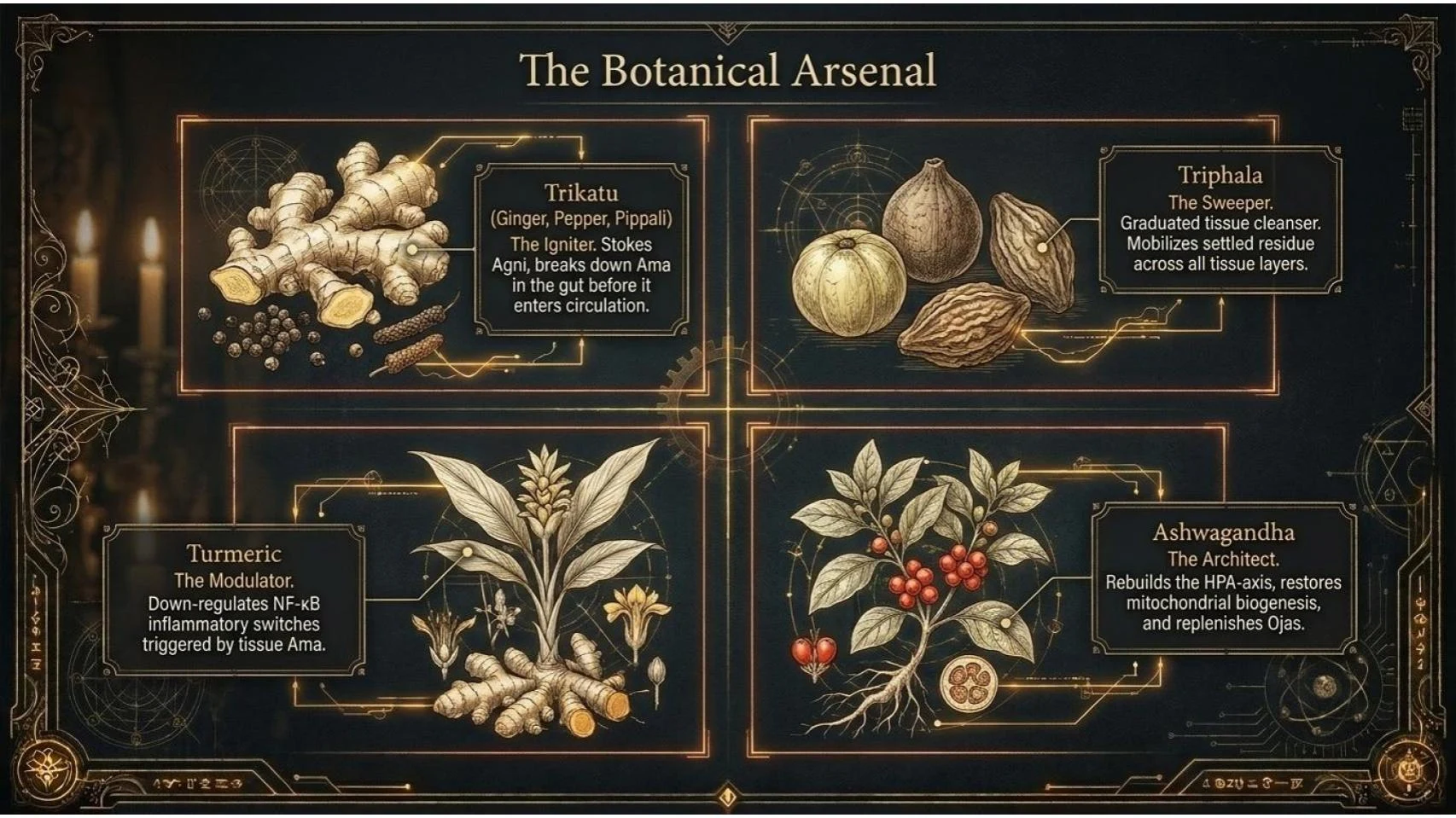
Trikatu — Ginger, Black Pepper, Pippali
The classical Ayurvedic Agni formula. Piperine from black pepper enhances bioavailability of all co-administered compounds (PMC3113382). Gingerols stimulate digestive secretions and motility. As a combination, Trikatu breaks down Ama in the gut before it enters circulation. Hildegard used ginger and black pepper in her warming composites for the same indication: cold, stagnant digestion.
Triphala — Amalaki, Bibhitaki, Haritaki
The most studied Ayurvedic formula in modern pharmacology. Haritaki (Terminalia chebula) alone has 40+ published studies. Triphala acts as a graduated tissue cleanser — mild enough for daily use, broad enough to address Ama at every tissue layer. Rich in tannins, ellagitannins, and vitamin C precursors; supports mitochondrial function and reduces oxidative stress markers (PMC5567597).
Turmeric — Curcuma longa
Curcumin modulates NF-κB, the master inflammatory switch that Ama in the tissues chronically activates (PMC5664031). Used in Ayurveda as a universal anti-Ama compound — clearing toxic accumulation from the liver, joints, and digestive mucosa. Best absorbed with piperine (black pepper) and fat — not as an isolated supplement, but as the whole root in a fatty preparation, exactly as traditional medicine has always prescribed it.
Wormwood — Artemisia absinthium
Hildegard von Bingen's primary Agni equivalent. Her May Cure: wormwood macerated in wine, taken in spring to clear the accumulated sluggishness of winter. Absinthin and artabsin — the bitter sesquiterpene lactones — stimulate bile production, pancreatic secretion, and gastric acid output. The bitter principle is the signal: "the fire is being stoked." Identical mechanism to Ayurvedic bitter digestives (tikta rasa herbs).
Ashwagandha — Withania somnifera
The primary Rasayana (rejuvenation) herb in Ayurveda — used after Ama clearance to rebuild depleted Ojas. Withanolides reduce cortisol, support mitochondrial biogenesis, and rebuild the HPA axis from chronic stress-driven depletion (PMC3252722). This is not a stimulant. It is a rebuilder — the botanical equivalent of restoring voltage to a discharged battery after the short circuit has been cleared.
Yarrow — Achillea millefolium
One of the Nine Sacred Herbs of the Anglo-Saxon tradition. Named for Achilles, who used it to staunch battlefield wounds. Yarrow's azulene, flavonoids, and alkaloids support hepatic clearance — the liver as the primary Ama-processing organ. In Ayurvedic terms, it supports Pitta's transformative function in the liver and small intestine. Modern research confirms choleretic activity: it increases bile flow and supports phase II liver detoxification.
Guduchi — Tinospora cordifolia
Called "Amrita" (immortality nectar) in Sanskrit. A deep Ama-clearing adaptogen that works at the tissue level — specifically targeting Ama that has reached stage IV (sthana-samshraya) and settled in immune tissue. Berberine-related alkaloids modulate macrophage function (PMC3644751). From Pollack's framework, Guduchi's dense polysaccharide content may support EZ-water formation in fascial tissue — the structured water layer that constitutes the functional matrix of the srotas.
Elderberry + Elderflower — Sambucus nigra
The elder was the central apothecary tree of Germanic folk medicine — "the pharmacy of the country people." Hildegard used both flower and berry. Elderflower is diaphoretic — it opens the channels, stimulates the surface circulation, helps the body push Ama toward the periphery for elimination. Elderberry is deeply antioxidant (PMC4848651): anthocyanins directly reduce oxidative Ama burden at the cellular level. Two parts of the same tree, targeting two stages of the same process.
The Protocol: Four Moves
Both Ayurveda and the Germanic tradition converge on the same four-move restoration sequence. There is no shortcut through this sequence. Stage IV cannot be addressed without first completing stages I and II.
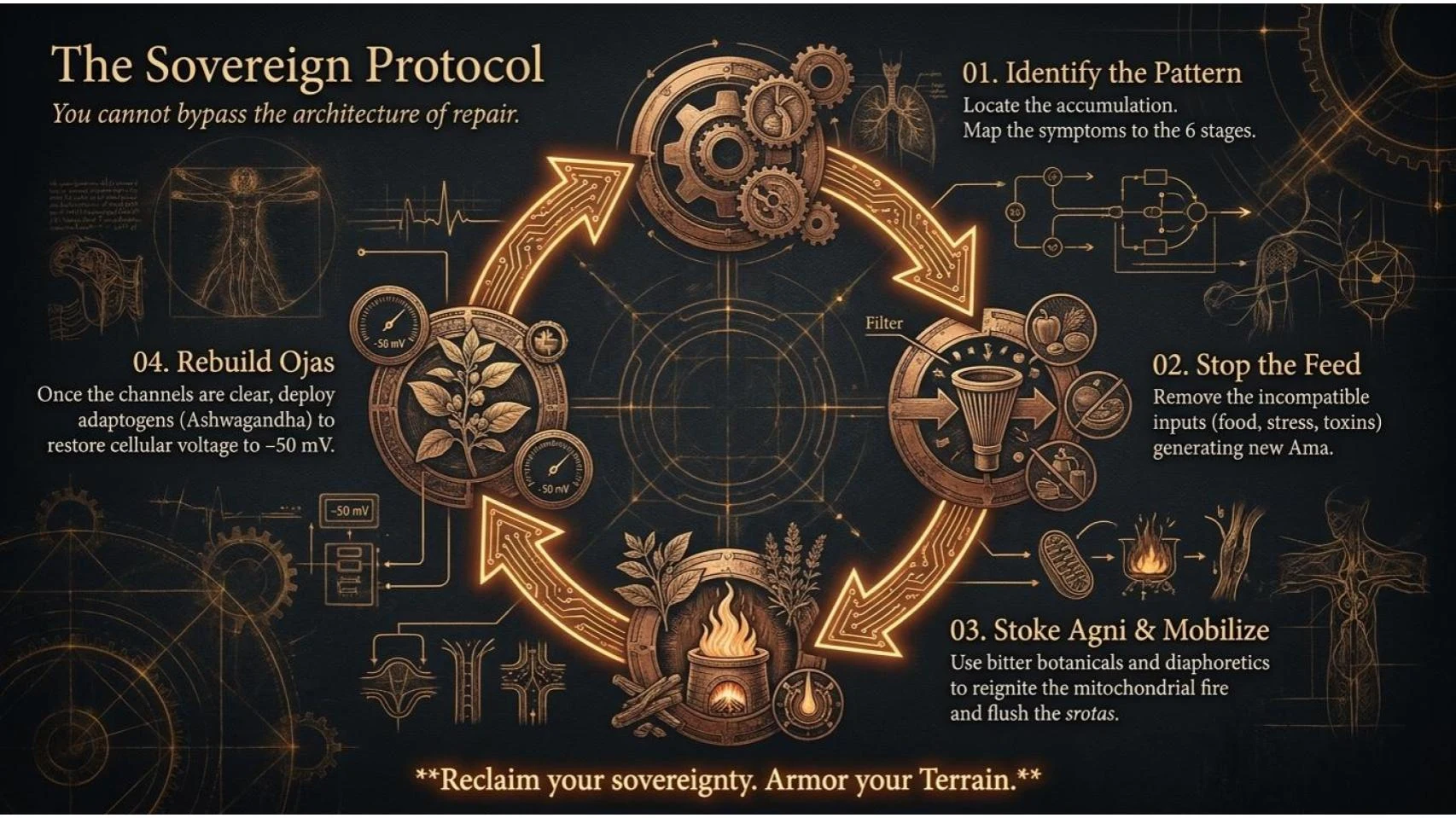
Identify the dominant Ama pattern
Tongue coating (thick, white = Kapha Ama / cold, stagnant; yellow = Pitta Ama / inflammatory; brown-grey = Vata Ama / degenerative). Fatigue pattern, digestion quality, joint mobility, skin clarity. These are the Samprapti stage indicators. You cannot burn what you have not located.
Stop feeding the accumulation
Ama is produced by food the body cannot process, stress the nervous system cannot resolve, and environmental load the detoxification pathways cannot clear. Remove the primary source first. A stronger fire cannot compensate for an unlimited fuel load of incompatible inputs.
Stoke Agni and mobilise Ama
Trikatu, wormwood, yarrow, and bitter digestives stoke the fire. Triphala and guduchi mobilise the settled residue. This phase produces temporary symptoms — fatigue, loose digestion, mild skin flares — because the Ama is moving. This is not a side effect. It is the correct response.
Rebuild Ojas / Viriditas
Once the channels are clear, the reconstruction begins. Ashwagandha, shatavari, triphala continued, and whole-food nourishment rebuild the depleted tissue reserves. Hildegard called this restoring the viriditas of the organs. Tennant would call it recharging the mitochondrial voltage to −50 mV. The language differs. The substrate is the same.
The deepest insight of both traditions is this: disease is not an event. It is a direction. The body does not suddenly become ill. It moves along a gradient from Sama Agni to Manda Agni to Ama accumulation to channel obstruction to structural degeneration. Every step of that gradient is both measurable and reversible — if caught early enough. The smoke alarm was always accurate. We were simply taught to remove the batteries instead of finding the smoke.
Sources
- Charaka Samhita, Sutrasthana 27, Nidanasthana 1 — classic Ayurvedic pathogenesis framework
- Tennant, J. (2010). Healing Is Voltage: The Handbook. 3rd ed. — cellular voltage and mitochondrial battery model
- Lad, V. (2002). Textbook of Ayurveda, Vol. 1. Ayurvedic Press — Agni, Ama, Samprapti staging
- Pollack, G.H. (2013). The Fourth Phase of Water. Ebner & Sons — EZ-water and fascial channel function
- Béchamp, A. (1883). The Blood and Its Third Anatomical Element — terrain and microzymian theory
- Hildegard von Bingen (c. 1151). Physica and Causae et Curae — Viriditas, wormwood May Cure, bitter composites
- Paracelsus (1536). Opus Paramirum — tartarische materie, archaeus, Tria Prima
- Shukla, V. et al. (2007). Trikatu — PMC3113382 — piperine bioavailability enhancement
- Peterson, C.T. et al. (2017). Triphala — PMC5567597 — antioxidant and tissue-protective mechanisms
- Gupta, S.C. et al. (2013). Curcumin and NF-κB — PMC5664031 — anti-inflammatory signalling
- Chandrasekhar, K. et al. (2012). Ashwagandha — PMC3252722 — cortisol, HPA axis, mitochondrial support
- Bisset, N.G. (1994). Herbal Drugs and Phytopharmaceuticals. Medpharm — Germanic herbal pharmacology