The Forgotten Crossroads: Why Modern Medicine Lost Sight of the Hardware
In the 19th century, the medical world stood at a historic crossroads. Two brilliant French scientists, Louis Pasteur and Antoine Béchamp, presented two fundamentally different visions of disease and health. The choice the world made then continues to dictate how you view and treat your own body today. It is time to understand the logic behind these two systems so you can reclaim sovereignty over your own terrain.
The Logic of the Germ (Germ Theory)
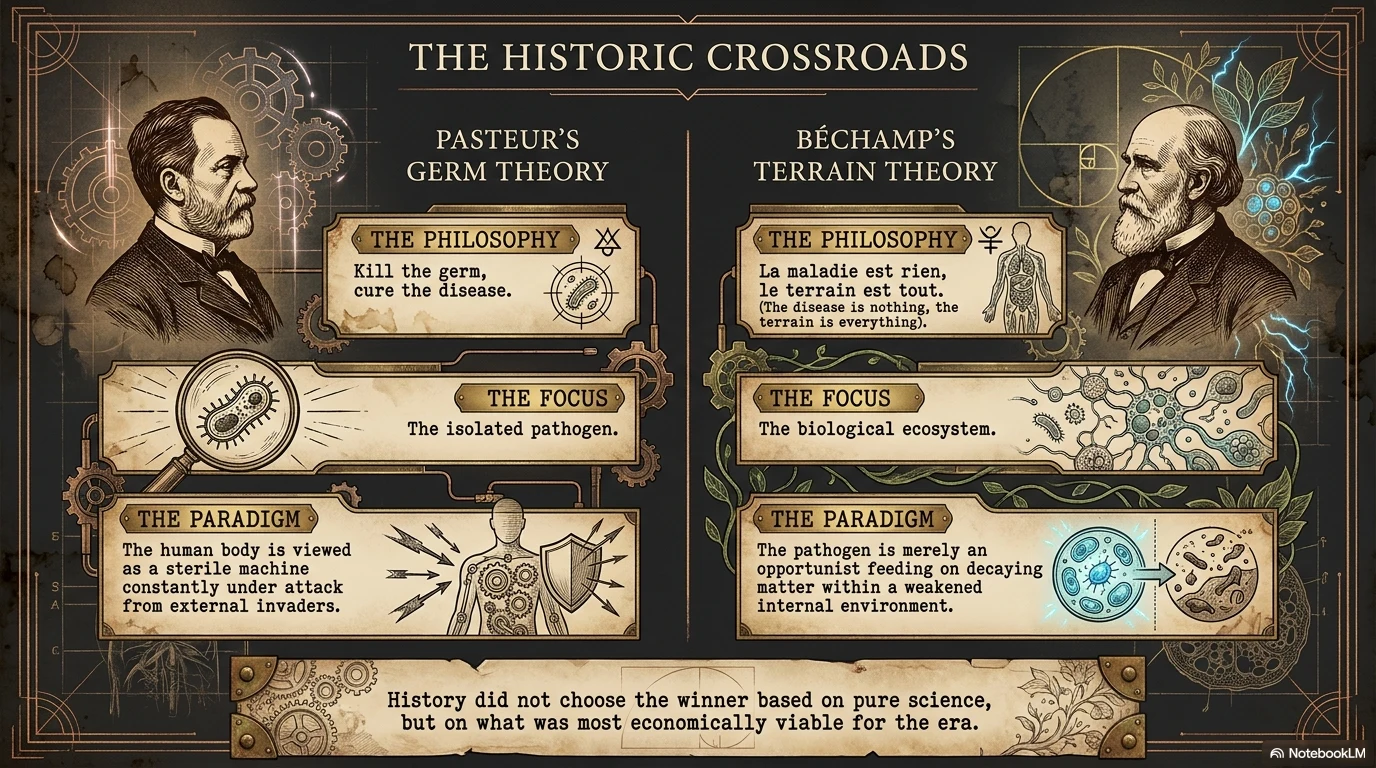
Louis Pasteur presented a vision we all know today: Germ Theory. His logic was simple and effective: disease is caused by external enemies — bacteria, viruses, fungi — that invade a healthy body and "attack" us.
In this model, the body is a passive victim. The solution? Wage war. We must kill the invader with antibiotics, vaccines, or chemicals. This vision was commercial and political gold. It allowed for a unique, patented "bullet" to be developed and sold for every unique "enemy." This is the birth of the medical industry as we know it — a system built on crisis management and external intervention.
The Logic of the Terrain (Terrain Theory)
Antoine Béchamp looked at health in a fundamentally different way. He proposed Terrain Theory. His logic was that micro-organisms are not fixed in their form but transform based on the environment they inhabit. This is called pleomorphism.
Béchamp discovered that in a healthy, oxygen-rich, and energetically charged body, these micro-organisms play a constructive role. Only when the internal environment — the Terrain — becomes polluted, acidic, or loses its electrical charge, do these particles transform into scavengers to clear away the dead waste.
"The microbe is nothing, the terrain is everything."
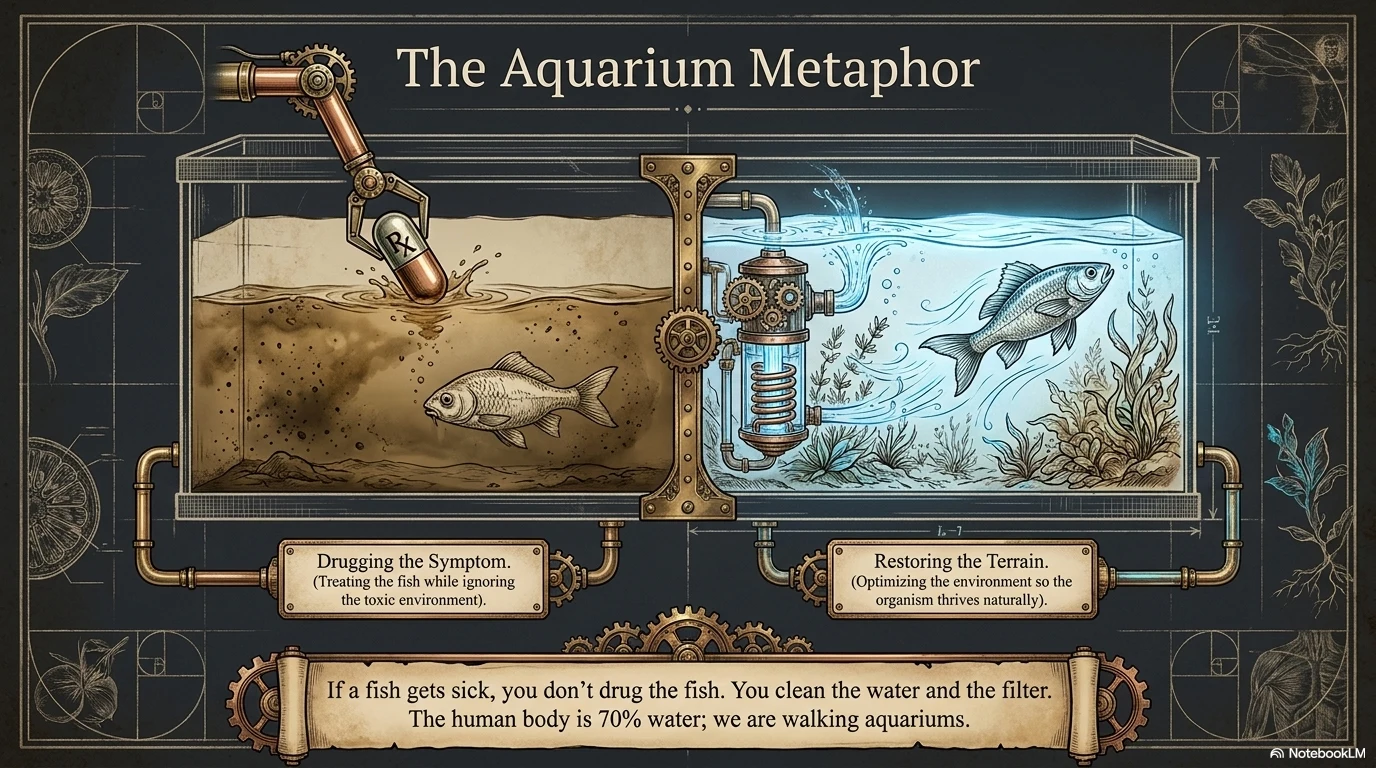
Think of it like an aquarium: if the fish get sick, you can inject the fish with chemicals (Pasteur), or you can change the water and clean the filter (Béchamp).
Why We Followed Pasteur — And the Price We Paid
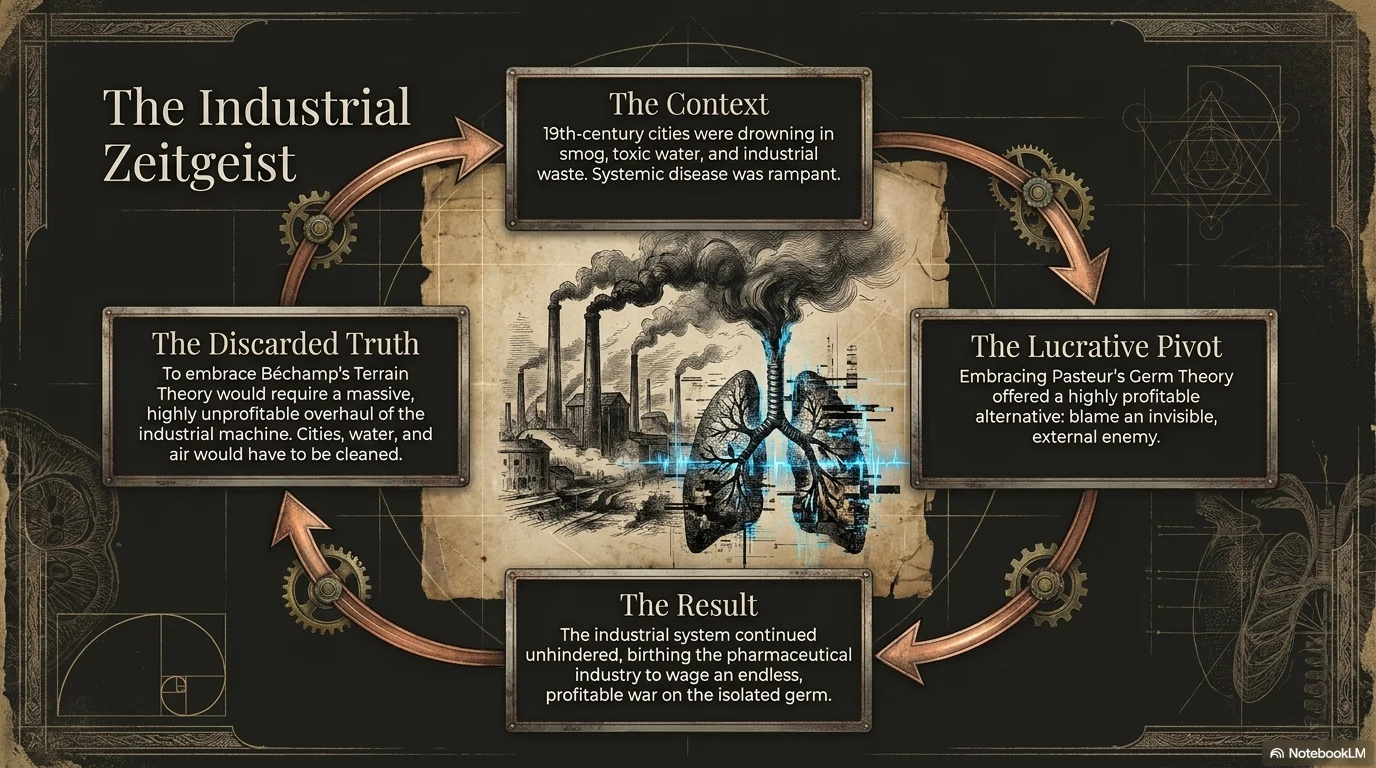
The world chose Pasteur. Not necessarily because he was right — his own private diaries later revealed he manipulated experiments on a large scale — but because his model suited the zeitgeist of the Industrial Revolution.
At that time, cities were polluted and working conditions were abysmal. Governments and industry did not want to hear that the environment and lifestyle were the causes of disease. That would mean the system itself had to change. The "external enemy" model was the perfect lightning rod: it blamed the invisible germ and offered a quick, marketable solution.
The Architecture of Today
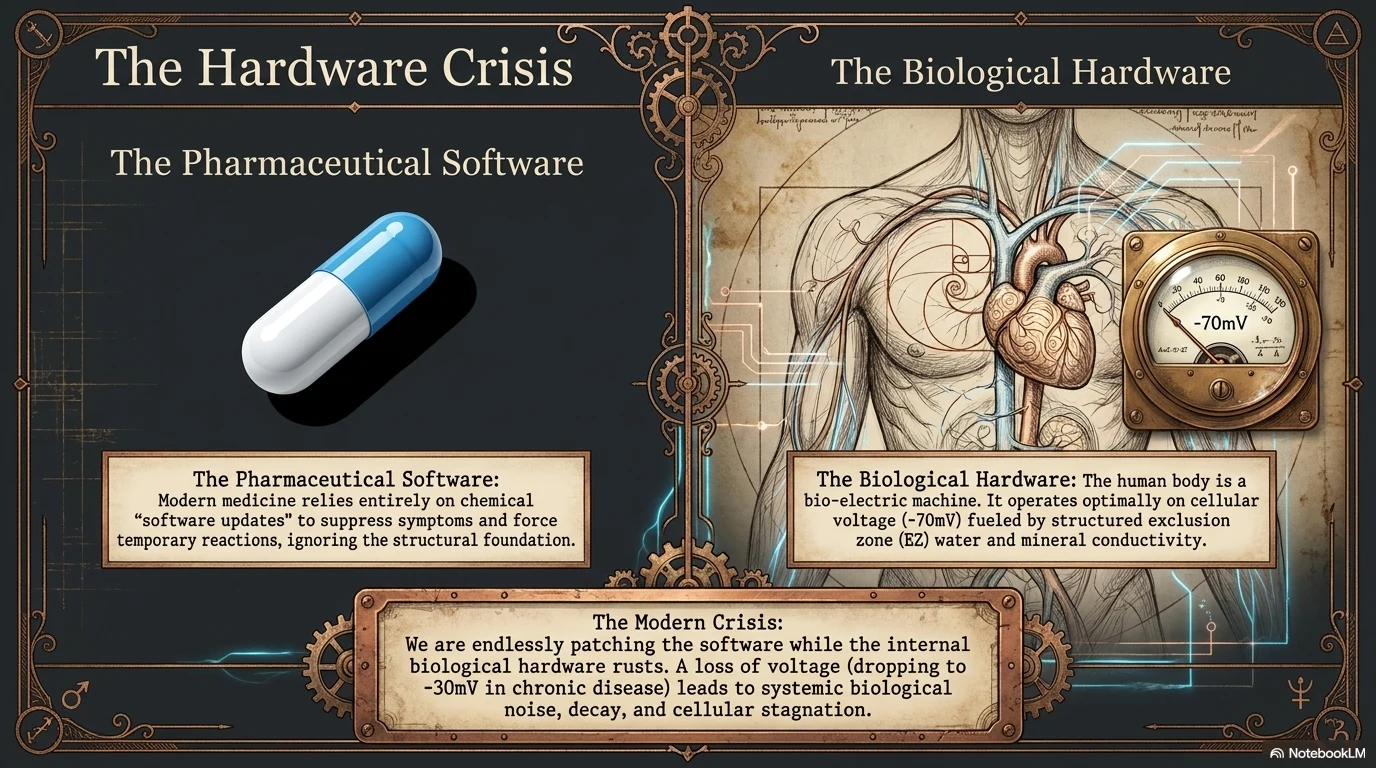
Today, we are seeing the results of that choice. We live in a world of chronic disease where we suppress symptoms with patented "software updates" — pharmaceuticals — while the internal hardware, the terrain, slowly deteriorates for lack of maintenance.
At Sovereign Health Botanicals, we build upon Béchamp's forgotten logic, updated with modern science. Disease is often nothing more than a biological response to a terrain that has lost its electrical voltage. In a body polluted by heavy metals, bombarded by anthropogenic radiation, and depleted of conductive minerals, health cannot exist. The germ is not your problem. Your stalled hardware is.
Sovereignty Begins with the Terrain
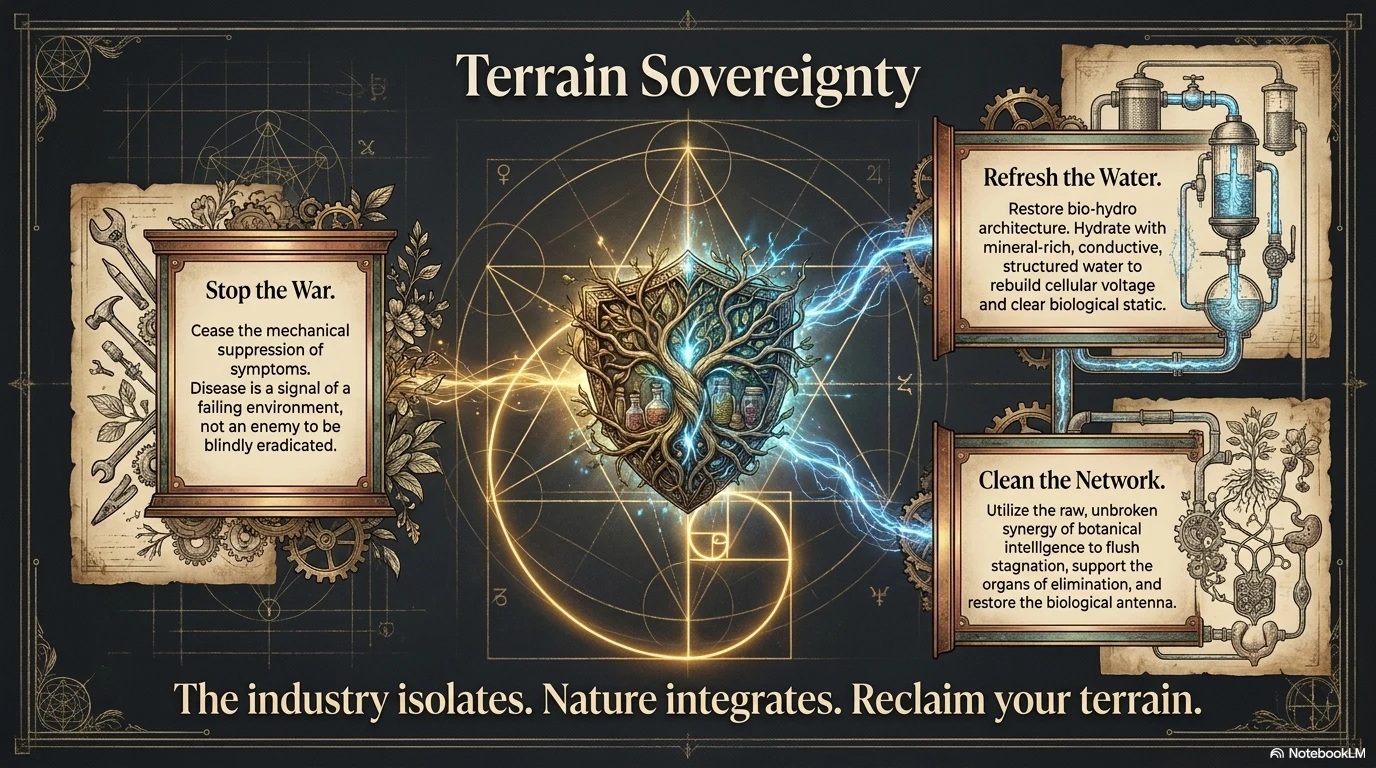
When you stop looking for an external enemy to fight and start building a healthy internal ecosystem, you step out of the matrix of dependency.
- Stop the Warfare — cease the constant suppression of symptoms
- Refresh the Water — focus on hydration, minerals, and cellular voltage
- Clean the Network — remove the noise and restore bio-electric communication
Healing is not a matter of finding the right bullet. It is a matter of building the right architecture.