Family Resonance Masterclass
Fourteen botanical families. Each one a distinct frequency band in the symphony of the plant kingdom. Richard Hayes has mapped their key members, biological roles and vibrational signatures — building a living reference for operators who want to understand plants not as isolated bullets, but as resonant systems. Welcome to the complete Herbal Resonance Garden.
14 Families — Jump to a Section
Lamiaceae — The Mint Family
Lavender · Rosemary · Oregano · Thyme · Sage · Peppermint · Lemon Balm
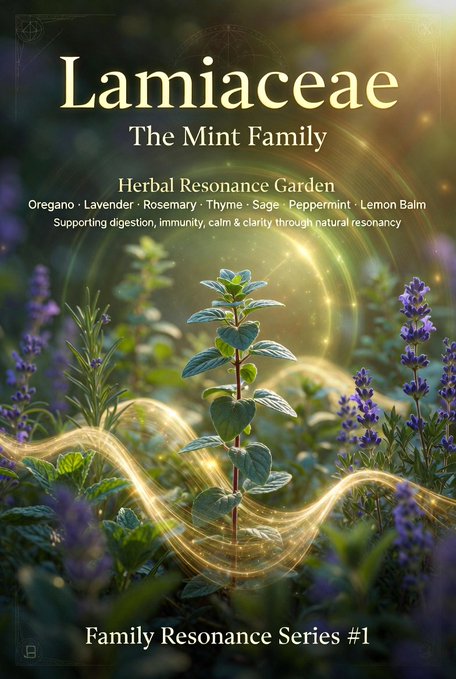
The Lamiaceae family is one of the most electrically alive botanical families on earth. Square stems, opposite leaves and volatile oil glands pack extraordinary biological intelligence into every cell. What makes them remarkable is not just their individual power, but the resonance they create together — covering the full spectrum from antimicrobial defense to nervous system regulation, digestive fire, hormonal balance, and cognitive clarity. This is not coincidence. This is botanical design.
Oregano
The antimicrobial anchor. Carvacrol and thymol deliver broad-spectrum biological defense without disrupting the native terrain. The sovereign soldier of the family.
Lavender
The nervous system calibrator. Linalool works directly on GABA receptors, quieting the electrical noise of chronic stress and restoring the parasympathetic state.
Rosemary
The cognitive activator. Increases cerebral circulation and delivers 1,8-cineole directly to the brain — sharpening memory, focus and mental clarity.
Thyme
The respiratory guardian. Thymol clears the airway terrain and supports mucociliary function. First responder for lung sovereignty.
Sage
The hormonal harmonizer. Regulates estrogenic activity, cools hot terrain, carries potent antimicrobial and anti-inflammatory intelligence. Sacred across cultures.
Peppermint
The digestive activator. Menthol relaxes smooth muscle of the GI tract, stimulates bile flow, and cools inflammatory heat throughout the digestive terrain.
Lemon Balm
The antiviral calmer. Rosmarinic acid inhibits viral replication while lifting mood and easing anxiety through gentle serotonergic modulation. Both shield and sanctuary in a single leaf.
Fresh herbs ~20–27 MHz. Essential oils reach significantly higher: Lavender 118 MHz · Peppermint 78 MHz · Lemon Balm ~72 MHz · Rosemary 50–55 MHz · Basil (related) 52 MHz. The highest measured frequencies of any aromatic family.
Asteraceae — The Daisy Family
Chamomile · Echinacea · Calendula · Yarrow · Dandelion
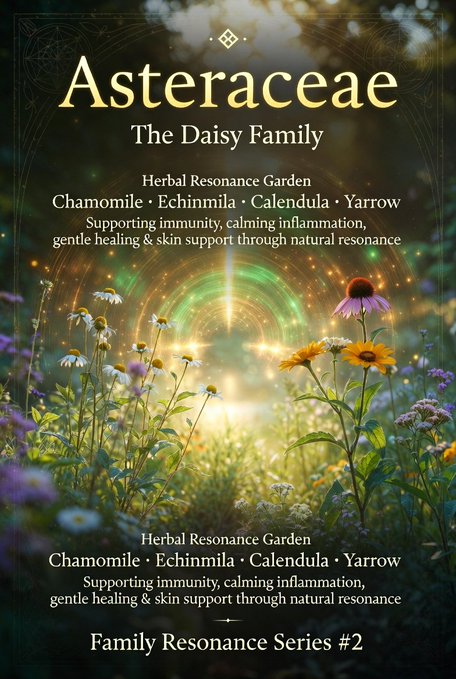
The largest flowering plant family on earth — over 23,000 species sharing a common botanical blueprint. Where Lamiaceae operates through aromatic volatility and antimicrobial force, Asteraceae works through modulation, repair and restoration. Chamomile, echinacea, calendula and yarrow form a gentle but complete resonance field: immune activation, inflammatory modulation, skin repair and systemic calm in a unified biological conversation.
Chamomile
Apigenin binds directly to GABA receptors, quieting nervous system noise and easing digestive spasm simultaneously. Anti-inflammatory, antispasmodic, deeply soothing.
Echinacea
The immune calibrator. Alkylamides modulate macrophage activity and upregulate innate immune response — not blindly, but by calibrating the biological defense network.
Calendula
Triterpenoids and flavonoids accelerate wound healing, reduce inflammatory signaling and support tissue regeneration. Bridges the inner and outer body with elegance.
Yarrow
The boundary keeper. Both diaphoretic and hemostatic — opens pores to release heat while tightening tissue to stop bleeding. Ancient wound-sealing intelligence.
Dandelion
The liver and lymphatic ally. Bitter compounds stimulate bile production, support detoxification pathways, and act as a prebiotic for the gut terrain. The most underrated tonic in the western world.
Fresh herbs ~20–27 MHz. Essential oils: German/Blue Chamomile ~105 MHz · Helichrysum 181 MHz — one of the highest measured values of any plant oil in the entire Tainio database.
Zingiberaceae — The Ginger Family
Turmeric · Ginger · Galangal
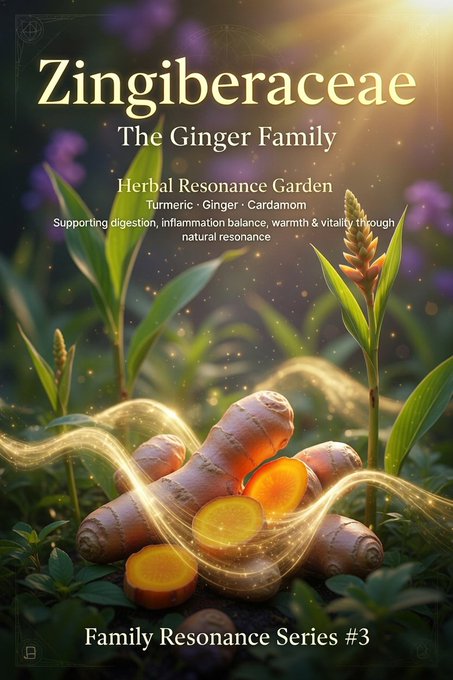
The Zingiberaceae family operates at the intersection of inflammation and metabolism. These are warming, activating plants — they stoke digestive fire, mobilize stagnation, and carry some of the most studied anti-inflammatory compounds in the botanical world. Turmeric's curcuminoids, ginger's gingerols and shogaols, and galangal's galangine work in distinct but complementary registers. Together they cover inflammatory terrain from the gut lining to the joints to the blood.
Turmeric
Curcumin inhibits NF-kB — the master inflammatory switch. Its synergy with black pepper (piperine) dramatically increases bioavailability. The terrain's most powerful anti-inflammatory botanical.
Ginger
Gingerols and shogaols inhibit prostaglandin synthesis, reduce nausea, stimulate circulation and support the mucosal lining of the GI tract. Warming from the inside out.
Galangal
The lesser-known ally. Galangin carries antioxidant and antimicrobial properties alongside digestive activation. Long used in Ayurvedic and TCM traditions for stagnant digestive terrain.
No specific essential oil measurements documented for Zingiberaceae members. Fresh herbs generally ~20–27 MHz. Vibrational quality is understood as deep, warming and penetrating — activating rather than elevating.
Rosaceae — The Rose Family
Rose · Hawthorn · Raspberry Leaf
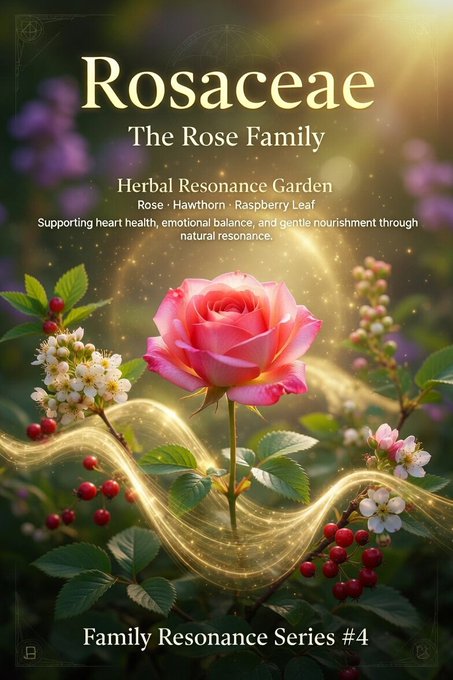
The Rosaceae family carries the highest measured vibrational frequency in the plant kingdom. Rose is not merely decorative — Rosa damascena essential oil holds the highest commonly cited Tainio frequency of any plant. The family governs the heart terrain, women's health, and the astringent layer of biological repair. Hawthorn directly supports cardiac voltage and vascular integrity. Raspberry leaf has been a foundational uterine tonic across centuries of traditional medicine.
Rose
Rosa damascena carries profound anti-inflammatory, nervine and heart-opening properties. Rich in vitamin C, bioflavonoids and volatile compounds that operate on both the emotional and physical terrain simultaneously.
Hawthorn
The cardiac voltage plant. Oligomeric proanthocyanidins improve coronary blood flow, strengthen the heart muscle and reduce peripheral vascular resistance. The sovereign ally of the VORTEX protocol.
Raspberry Leaf
Tones and strengthens the uterine musculature, balances the female hormonal terrain and provides deep astringent repair to mucosal linings. Uterine tonic and digestive ally in one.
Fresh herbs ~20–27 MHz. Essential oil: Rose (Rosa damascena) 320 MHz — the highest commonly cited frequency of any plant oil in the Tainio BT3 database. A sovereign frequency benchmark.
Fabaceae — The Legume Family
Red Clover · Licorice · Astragalus
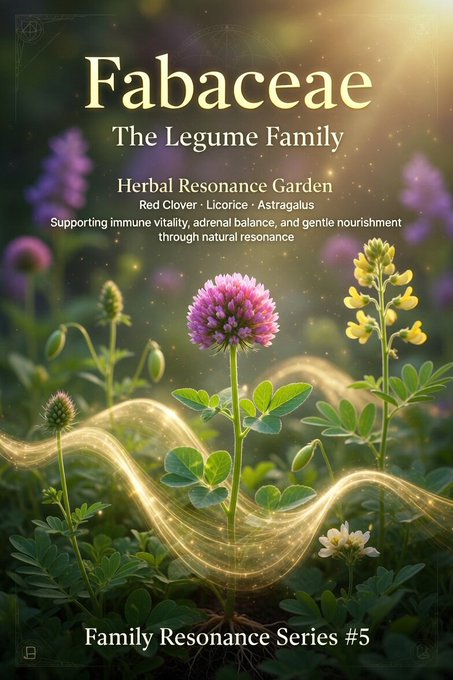
The Fabaceae family bridges hormonal balance, deep immune modulation and adaptogenic resilience. These plants work slowly and deeply — they are not acute-response tools but long-arc terrain builders. Red clover's isoflavones gently modulate estrogen receptors. Licorice's glycyrrhizin supports adrenal function and soothes the mucosal terrain of the gut and respiratory tract. Astragalus is one of the most studied adaptogens in Chinese medicine, modulating the immune response without overstimulation.
Red Clover
Rich in phytoestrogens — isoflavones that bind to estrogen receptors and modulate hormonal terrain. Supports the cardiovascular system and provides broad antioxidant coverage.
Licorice Root
Glycyrrhizin supports adrenal function and cortisol regulation. Powerfully demulcent for gut and respiratory mucosal linings. Potent — use with care in extended protocols.
Astragalus
The adaptogenic immune builder. Polysaccharides and saponins upregulate T-cell activity and support deep immune resilience without acute stimulation. A foundational long-term terrain ally.
No specific measurements documented for Fabaceae members. Fresh herbs generally ~20–27 MHz. These plants are deep-working adaptogens — their resonance is steady and sustained rather than acutely elevated.
Malvaceae — The Mallow Family
Marshmallow Root · Hibiscus
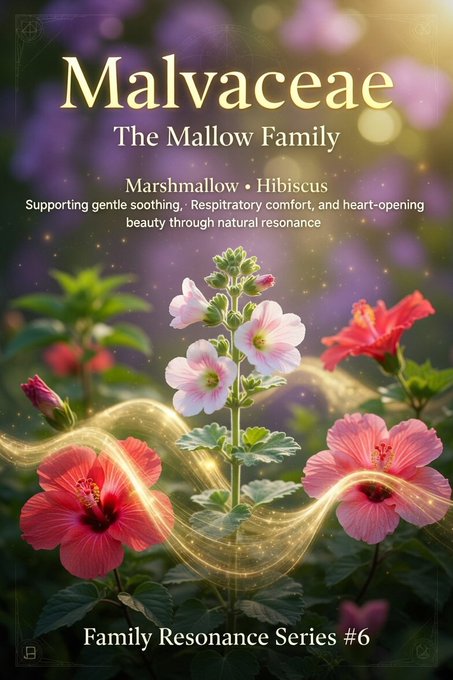
The Malvaceae family is the terrain's great soother. These are mucilaginous plants — they form a protective gel-like coating on inflamed mucous membranes, creating a physical and biochemical buffer for tissue under stress. Marshmallow root is the primary demulcent herb of Western herbalism, addressing inflammation of the gut, urinary tract and respiratory lining in a single action. Hibiscus brings cardiovascular and antioxidant depth to the family.
Marshmallow Root
Mucilaginous polysaccharides coat and soothe inflamed mucosal surfaces throughout the digestive and urinary terrain. Cold-water extraction preserves the mucilage. The SGP protocol's primary demulcent ally.
Hibiscus
Anthocyanins and organic acids support cardiovascular health and blood pressure regulation. Strong antioxidant profile, gentle diuretic action and a deeply nourishing sour flavor that signals biological depth.
No specific measurements documented. Fresh herbs generally ~20–27 MHz. The Malvaceae family's resonance is soft and coating — moisture, protection and restoration at the mucosal boundary.
Apiaceae — The Parsley/Carrot Family
Fennel · Dill · Angelica · Cumin
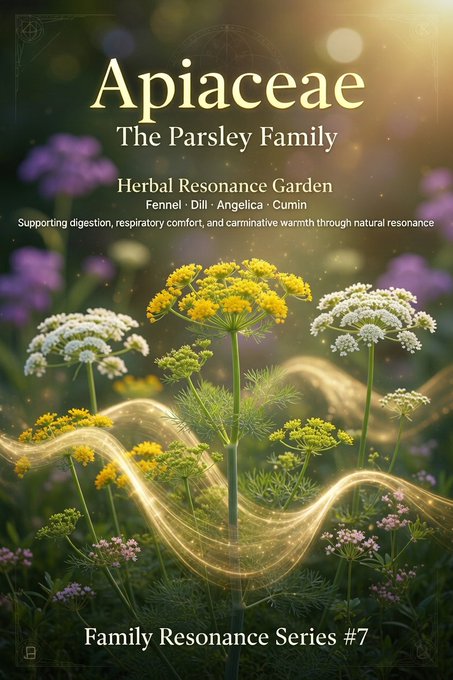
The Apiaceae family governs the digestive and respiratory terrain through carminative action. These are plants of the hollow space — they clear gas, reduce bloating, ease cramping and open the airways. The hollow umbel flower structure of this family mirrors the hollow biological passages they support: the intestinal lumen, the bronchial tree, the urinary tract. Angelica brings a deeper, more complex spiritual and biochemical dimension to the family.
Fennel
Anethole relaxes intestinal smooth muscle, clears flatulence and reduces cramping. A foundational carminative ally used across all digestive protocols from infant colic to IBS terrain.
Dill
Carminative and antispasmodic. Supports digestive motility, reduces colic and bloating, and carries mild antimicrobial properties alongside its gentle warming action.
Angelica
The spiritual anchor of the family. Coumarin compounds act on the respiratory terrain and circulation. Used traditionally for its warming, tonifying and deeply revitalizing effects.
Cumin
Rich in cuminaldehyde — powerful digestive activator that stimulates enzyme secretion, improves fat digestion and carries antioxidant depth. Essential in the kitchen and the protocol.
Fresh herbs ~20–27 MHz. Essential oil: Angelica 85 MHz — the standout measurement of the family, reflecting its deep tonifying and restorative properties.
Berberidaceae — The Barberry Family
Barberry · Oregon Grape · Mayapple
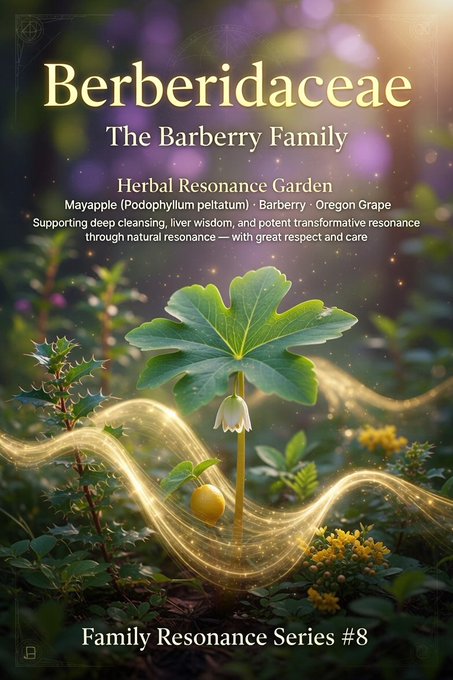
The Berberidaceae family is defined by one compound above all others: berberine. This alkaloid crosses family lines and is among the most clinically studied phytochemicals known — with documented action on blood sugar regulation, gut microbiome composition, lipid metabolism and microbial resistance. These are potent, biochemically deep plants that demand respect. They work at a different register than gentle aromatic herbs — their intelligence is metabolic and transformative.
Barberry
High berberine content supports blood sugar regulation, bile secretion and broad-spectrum antimicrobial activity. A potent digestive and metabolic ally that works on the liver and gut terrain simultaneously.
Oregon Grape
Root and bark carry berberine alongside other alkaloids. Traditionally used for liver support, skin conditions and antimicrobial terrain work. Often paired with gentler demulcents to protect the mucosal lining.
Mayapple
Podophyllotoxin — the same compound isolated for oncology chemotherapy. In its natural botanical context, used with great precision and respect. Power lives in this root.
No specific individual measurements documented. Fresh roots generally in the ~20–27 MHz range. These plants are often used in potent, concentrated forms — their energetic profile is considered deep and transformative rather than high-frequency in the essential oil sense. Use with great respect.
Solanaceae — The Nightshade Family
Cayenne · Ashwagandha · Belladonna (micro-dose only)
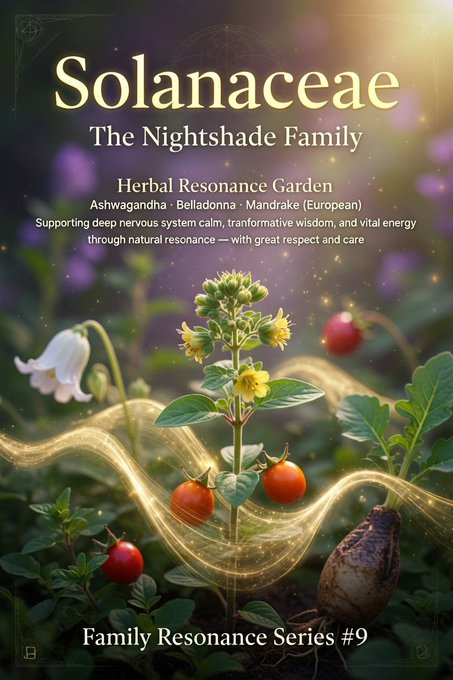
The Solanaceae family is one of contradictions — some of the most nourishing medicinal plants and some of the most toxic alkaloids coexist within its lineage. The family demands discernment. Cayenne is perhaps the most studied circulatory stimulant in Western herbalism. Ashwagandha has become one of the world's most sought-after adaptogens. Belladonna, in clinical micro-dose contexts, has a long medical history — but it holds real toxicological risk and belongs only in the hands of trained practitioners.
Cayenne
Capsaicin depletes Substance P — the neurotransmitter of pain signaling — and powerfully stimulates circulation. Activates the TRPV1 receptor, generating thermogenic metabolic heat. A sovereign cardiovascular and pain terrain ally.
Ashwagandha
Withanolides regulate cortisol, support thyroid function and rebuild adrenal resilience under chronic stress. One of Ayurveda's most important Rasayana (rejuvenating) herbs. The VOLT protocol's adaptogenic core.
No specific measurements for medicinal family members. Fresh herbs generally ~20–27 MHz. The energetic character of this family spans extremes — from the warming elevation of cayenne to the grounding depth of ashwagandha.
Ranunculaceae — The Buttercup Family
Black Cohosh · Goldenseal · Pulsatilla
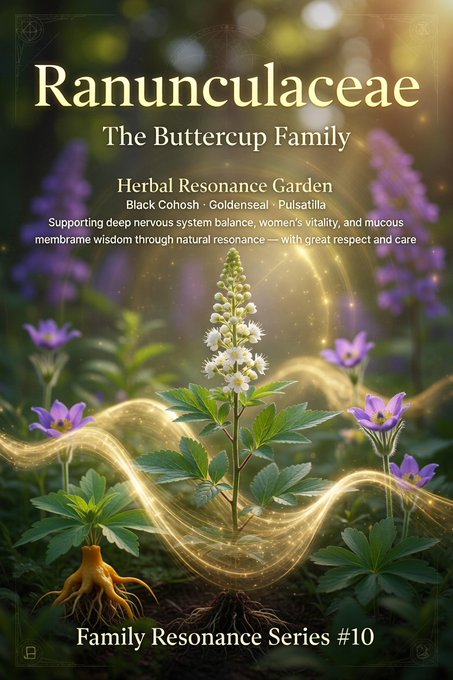
The Ranunculaceae family is the woodland's deep terrain pharmacopoeia. These are roots and rhizomes of the forest floor — bitter, alterative, grounding. Black Cohosh addresses the female hormonal terrain with a depth that few plants can match. Goldenseal is the sovereign anti-infective of North American herbal medicine, carrying berberine and hydrastine in powerful combination. Pulsatilla brings its delicate nervous system and genitourinary intelligence. These are not fast-food herbs — they are slow, deep and profoundly effective.
Black Cohosh
Triterpene glycosides modulate serotonin and dopamine receptors, explaining the plant's documented effect on menopausal hot flushes, mood and hormonal terrain. A profound female tonic.
Goldenseal
Berberine and hydrastine combine for powerful antimicrobial, astringent and immune-activating action. A premier herb for mucosal infection and digestive terrain — but respect its potency and use in cycles.
Pulsatilla
Delicate but deep. Traditional use spans nervous system tension, genitourinary inflammation and headache terrain. Requires respect for dosing — fresh plant preparations are considerably more potent than dried.
No specific measurements exist for these woodland plants. Align with the general fresh herbs range of ~20–27 MHz (dried ~15–22 MHz). Their resonance is described as steady and deeply supportive — grounding rather than elevating.
Caprifoliaceae — The Honeysuckle Family
Elder · Honeysuckle · Valerian
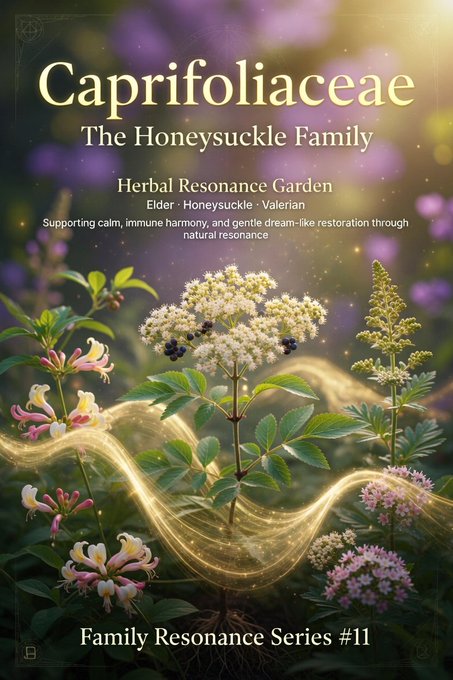
The Caprifoliaceae family governs the intersection of immune response, nervous restoration and the dream layer of biology. Elder is the most documented antiviral plant in the northern hemisphere. Valerian is the terrain's great sleep and nervous system repair ally. Honeysuckle brings its own antiviral and anti-inflammatory properties to the family. Together they address the night-time healing cycle — immune response, stress resolution, deep restoration. The family of calm and recovery.
Elder (Sambucus nigra)
Flavonoids inhibit viral attachment and replication. Elderberry and elderflower together cover fever, immunity and respiratory terrain. The most studied antiviral botanical in European herbal medicine.
Valerian
Valerenic acid modulates GABA receptors without the dependency profile of pharmaceutical sedatives. Restores sleep architecture, reduces anxiety and supports nervous terrain repair during the night cycle.
Honeysuckle
Luteolin and chlorogenic acid carry antiviral, anti-inflammatory and antioxidant properties. Used extensively in Chinese medicine for fever, respiratory infections and heat-pattern terrain.
Fresh herbs and flowers ~20–27 MHz. No standout essential oil measurements widely recorded for the family, but the delicate floral and berry notes — especially elder and honeysuckle — carry a light, uplifting resonance in the fresh herb range.
Boraginaceae — The Borage Family
Comfrey · Borage · Lungwort
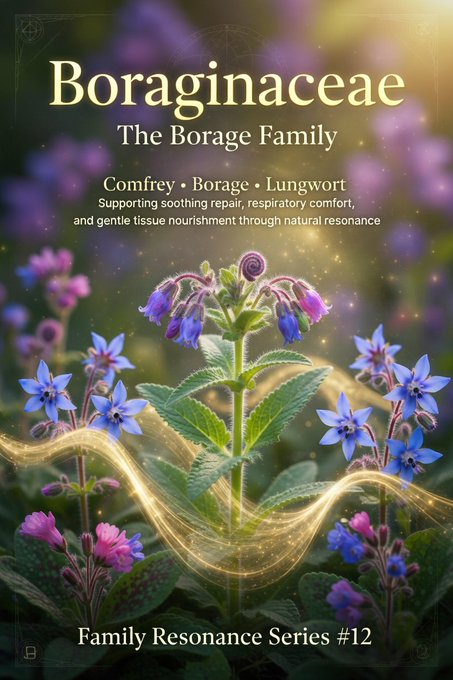
The Boraginaceae family specializes in tissue repair and respiratory nourishment. These are the plants of the structural terrain — comfrey's allantoin accelerates cell division and wound healing at a rate few botanicals can match. Borage brings GLA (gamma-linolenic acid) and adrenal tonic properties. Lungwort, with its lung-shaped spotted leaves and doctrine of signatures, supports the respiratory mucosal terrain. These plants do not energize — they rebuild.
Comfrey
Allantoin stimulates cell proliferation — accelerating wound healing, bone repair and tissue knitting. Use externally for fractures, sprains and skin repair. Internal long-term use requires caution due to pyrrolizidine alkaloid content.
Borage
Exceptional GLA content supports anti-inflammatory prostaglandin pathways. Traditionally used as an adrenal tonic for exhaustion and nervous terrain depletion. Seed oil is one of the richest plant sources of GLA.
Lungwort
Named for its spotted leaves resembling lung tissue — the Doctrine of Signatures pointing directly to its respiratory application. Soothes bronchial irritation and supports mucosal repair of the respiratory terrain.
Fresh herbs ~20–27 MHz. The mucilaginous, soothing nature of these plants aligns with the gentle fresh-herb frequency range. No standout high-frequency essential oils noted for the family — their resonance is structural and restorative.
Papaveraceae — The Poppy Family
California Poppy · Bloodroot · Corydalis
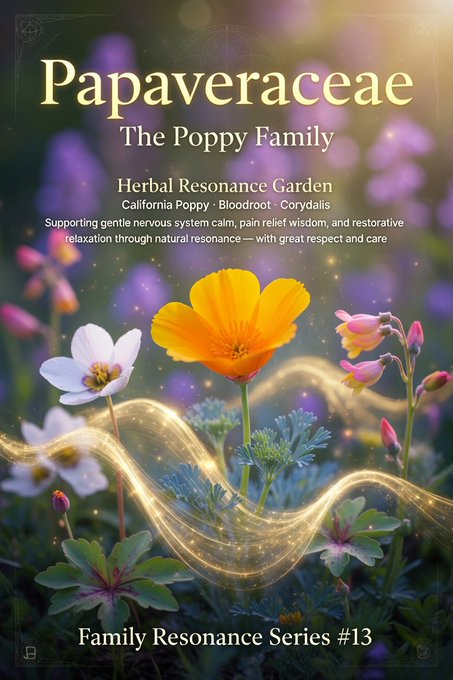
The Papaveraceae family carries the alkaloid keys to the nervous system's deepest rest states. This is not the family of opium — these are the gentle, legal and profoundly effective cousins: California poppy for non-addictive nervous system calm, Corydalis for pain and emotional terrain, Bloodroot for antimicrobial and dental terrain work. The family teaches that the nervous system has legitimate plant allies that do not require dependency or toxicological risk.
California Poppy
Eschscholzia californica contains no opiates. Its own alkaloids — californidine, protopine — produce genuine anxiolytic and sleep-supporting effects through distinct receptor pathways. Non-addictive nervous system calm.
Corydalis
DLHP (dehydrocorybulbine) acts on dopamine receptors to produce analgesia without addiction. One of the most important pain terrain herbs in Chinese medicine. Works on both acute and chronic pain patterns.
Bloodroot
Sanguinarine carries potent antimicrobial properties relevant to the oral terrain. Historically used in dental protocols — concentrated preparations require precision. The ORAL protocol's most powerful botanical ally.
Fresh herbs and delicate flowers ~20–27 MHz (slightly lower when dried). These alkaloid-rich plants are valued for their calming and grounding subtle resonance rather than elevated measurable frequencies.
Urticaceae — The Nettle Family
Stinging Nettle · and Allies
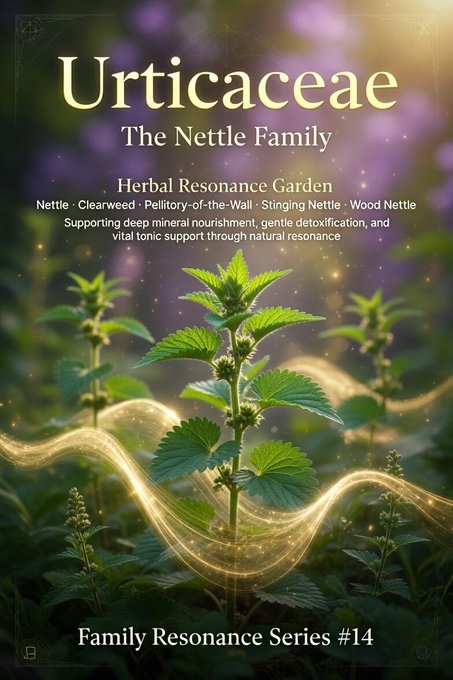
The Urticaceae family is the terrain's primary mineral delivery system. Stinging nettle is one of the most nutrient-dense plants accessible in the northern hemisphere — iron, silica, magnesium, calcium, potassium and vitamins K and C in a bioavailable, chelated form that no synthetic supplement can replicate. This is not a specialized herb for niche conditions. Nettle is terrain maintenance — the everyday tonic that keeps the battery charged and the mineral transaction flowing.
Stinging Nettle (Leaf)
Deep mineral nourishment: iron, silica, calcium, magnesium, potassium, chlorophyll. Supports the VOLT protocol's core mineral base. Anti-inflammatory through histamine modulation — paradoxically, one of the best anti-allergy plants despite containing histamine.
Stinging Nettle (Root)
A separate pharmacology from the leaf. Root extracts modulate SHBG (sex hormone-binding globulin), supporting the Prostate Restore protocol and male hormonal terrain. The same plant — two completely different biological applications.
Fresh herbs ~20–27 MHz. Dried nettle often sits around 15–22 MHz. As a mineral-rich tonic, its resonance is steady and deeply nourishing — not dramatically elevated, but foundational and sustaining. The frequency of the earth itself.
It has been a challenge, but it has been fun. A double joy of personal learning and the hope of awakening minds to the benefits of herbalism and the nature way.
I love what Jung said when asked if he believed in God. After a long thoughtful pause he said: "No, I don't believe God exists... I know God exists." That we have the Doctrine of Signatures. All these healing plants. Knowing that they complement each other perfectly — that is more than enough to know that there are more things in heaven and earth than we can dream of. 🌿
— Richard Hayes, Sovereign Health Club · @Richard38749337